
Disclaimer
The entire Desecheo National Wildlife Refuge is closed to the public due
to the presence of Unexploded Ordinance (UXO). Drones are strictly prohibited.
This expedition is permitted under a Special Use Permit issued by the US Fish and Wildlife
Service, subject to strict conditions (Permit #: 41523-2025-03). All equipment deployment will take place under the supervision of Refuge staff.
Desecheo National Wildlife Refuge safe from invasive mammals after nearly 100 years.
After more than a decade of conservation intervention, Desecheo National Wildlife Refuge (NWR) is once again safe for the Threatened Higo Chumbo cactus, native seabirds, and unique lizards found nowhere else in the world.
Just one year after the final phase of an ambitious operation to rid Desecheo NWR of introduced, damaging (invasive) rats, conservation biologists have confirmed that these predators are absent from the island, and the operation was a success. This project, the largest conservation operation of its kind to date in the region, would enable the island to return to its former and rightful status: the most important seabird colony in the region. The refuge lost this status due to the presence of invasive mammals for almost a century.
Desecheo Island is a small island, 360 acres in size, located off the northwest coast of
Puerto Rico. The island consists of a volcanic peak with sharp limestone edges, and its
highest point is 213 m above sea level. The vegetation consists of a subtropical dry forest
composed of a mosaic of open grasslands, shrubs, cacti, and semi-deciduous forest.
Beginning in 1940, the Air Corps/Air Force utilized the island as a bombing range through
1964.
A year later, it was transferred to the National Institute of Health, which introduced
rhesus monkeys to the island in 1966 for medical research. In 1976, the island was
transferred to the US Fish and Wildlife Service (USFWS) for management as a National
Wildlife Refuge and is one of the nine refuges managed by USFWS across the Caribbean.
The Refuge is closed to the public due to an Unexploded Ordnance (UXO).
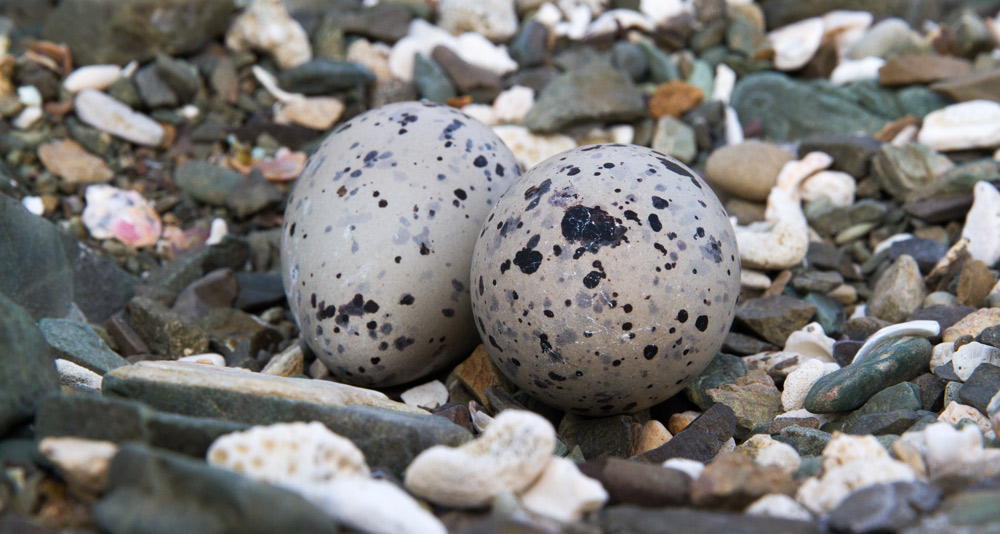
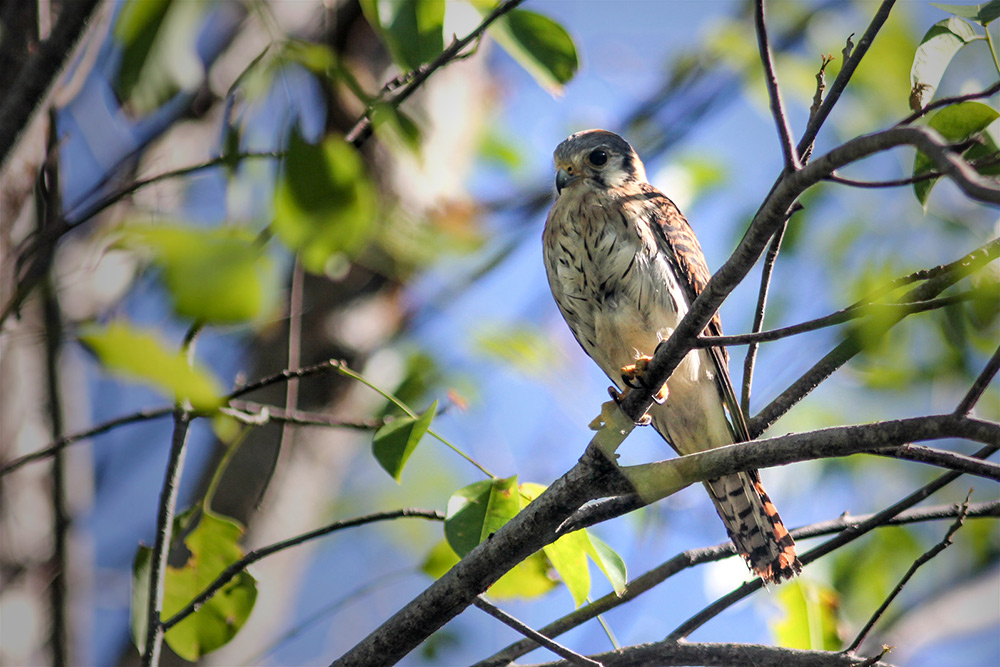
Historically, Desecheo Island was an important habitat for seabirds in the Caribbean, being
once home to one of the largest colonies of Brown Boobies in the Caribbean; with over
15,000 breeding individuals were reported during the 1927 nesting season. Other seabird
species that have historically been present and/or nesting on the island include the Red-
footed Booby, Brown Noddy, Bridled Tern, Magnificent Frigatebird, and Laughing Gulls.
Unfortunately, the combination of factors, including disturbance from bombing and
invasive mammals on the island (i.e., rhesus monkeys, rats, goats, and cats), resulted in
significant habitat loss and the disappearance of five of the seven breeding seabird
species.
To address these issues, in 2003, the USFWS initiated an eradication campaign to remove
invasive mammal species from the island. These efforts took 20 years and involved
collaboration among key partners, including the US Department of Agriculture, Island
Conservation (International NGO), and the Puerto Rico Department of Natural and
Environmental Resources.
The island was declared free of invasive mammals in 2017. After the eradication efforts, a
team of conservation biologists visited the island to confirm the presence or absence of invasive
rats. Hundreds of detection devices were deployed and monitored, including chew tags, tracking
tunnels, live traps, and remote, motion-triggered cameras. Following the ten-day deployment and
processing tens of thousands of remote, motion-activated camera images captured in the field,
the team confirmed: no sign of rats! — or other invasive mammals!
Following the successful eradication efforts, the USFWS, in partnership with Island
Conservation and Effective Environmental Restoration, Inc., established biosecurity and
social attraction initiatives to maintain the island rat-free and re-establish seabird colonies
on Desecheo NWR. As of today, a noticeable change has occurred in the structure,
composition, and recruitment of the plant community, including an increase in the
population of the endangered endemic cactus Harrisia portoricensis (Higo Chumbo) and
the resurgence of other native cactus species. The island also has a high degree of
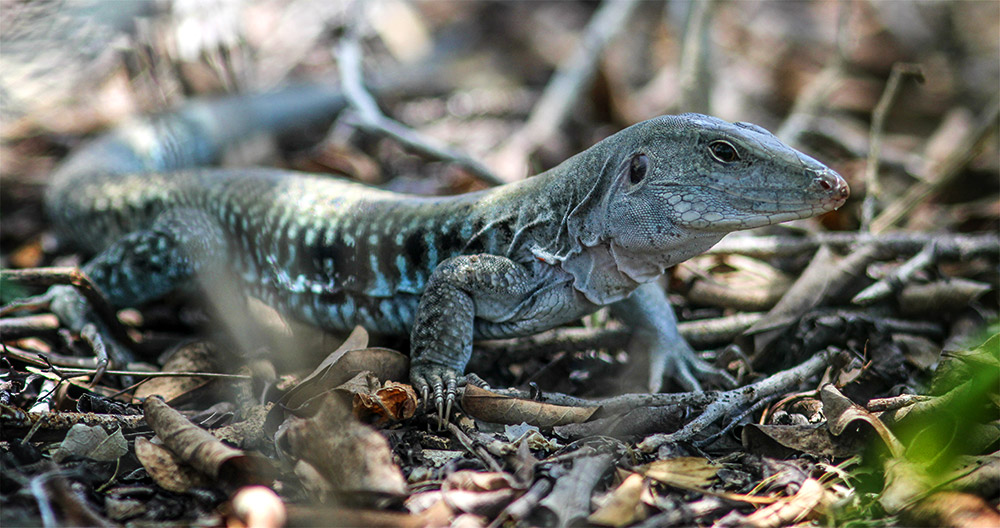
herpetofaunal endemism, with three endemic reptile species (Pholidoscelis desechensis,
Anolis desechensis, and Sphaerodactylus levinsi) that have benefited from the removal of
invasive mammal species. All these findings are encouraging signs of the island’s recovery
to become again a refuge for birds in the Caribbean and the efficiency of a strict biosecurity
protocol to avoid/ minimize a re-invasion of invasive mammals on the island.
More information can be found on the Refuge website, where you can also find the
Comprehensive Conservation Plan for the Refuge.
Desecheo National Wildlife Refuge | U.S. Fish & Wildlife Service