History
After returning from Bouvet in 2023, Otis NP4G traveled to Vieques Island to reunite with longtime friends Daniel KP3DR and Alberic NP3MR. Our friendship spans many years, and during this visit Daniel shared his recent retirement from the EPA, where he had worked extensively on toxic munitions cleanup efforts in Vieques. Interestingly, Daniel had previously visited Desecheo Island on a work assignment but had never been exposed to the world of DXpeditions—or how significant Desecheo is to the global DX community.
Following numerous discussions and outreach efforts, our first formal meeting with the U.S. Fish & Wildlife Service (USFWS) took place in the summer of 2024. The purpose was to explore the feasibility of conducting an amateur radio DXpedition to Desecheo Island. Subsequent meetings and careful coordination ultimately resulted in official permission being granted for this operation.
This DXpedition represents a historic milestone: it is the first Puerto Rico KP4-led DXpedition in over 46 years. The first KP4-led activation was conducted by David Novoa and his team under the callsign KP4AM/D. The most recent DXpedition prior to this effort was K5D in 2009, led by Glen Johnson W0GJ and the late Bob K4UEE (SK). It has now been 17 years since Desecheo was last activated.
Over the years, extensive efforts have been undertaken to eradicate invasive species from the island to allow native wildlife to reestablish itself. In 2017, after more than $5 million and countless hours of work, the USFWS officially declared Desecheo Island free of invasive species. In 2018, social attraction monitoring projects began for five seabird species across various areas of the island. These monitoring efforts follow the breeding seasons of each species:
- January–July: Sargasso Shearwater, Brown Noddy, Bridled Tern, Brown Booby, and Magnificent Frigatebird
- September–October: Additional peak activity for the Brown Booby
- November–January: Monitoring of the Black-capped Petrel, recently listed as endangered under the Endangered Species Act
Given these significant conservation achievements, it was critical that our DXpedition posed no risk of reintroducing invasive species. Thanks to modern technology, we are now able to deploy a low-impact, low-cost DXpedition, carefully designed to protect the environment while activating what is currently the 14th most wanted DXCC entity worldwide (Club Log).
Dedication
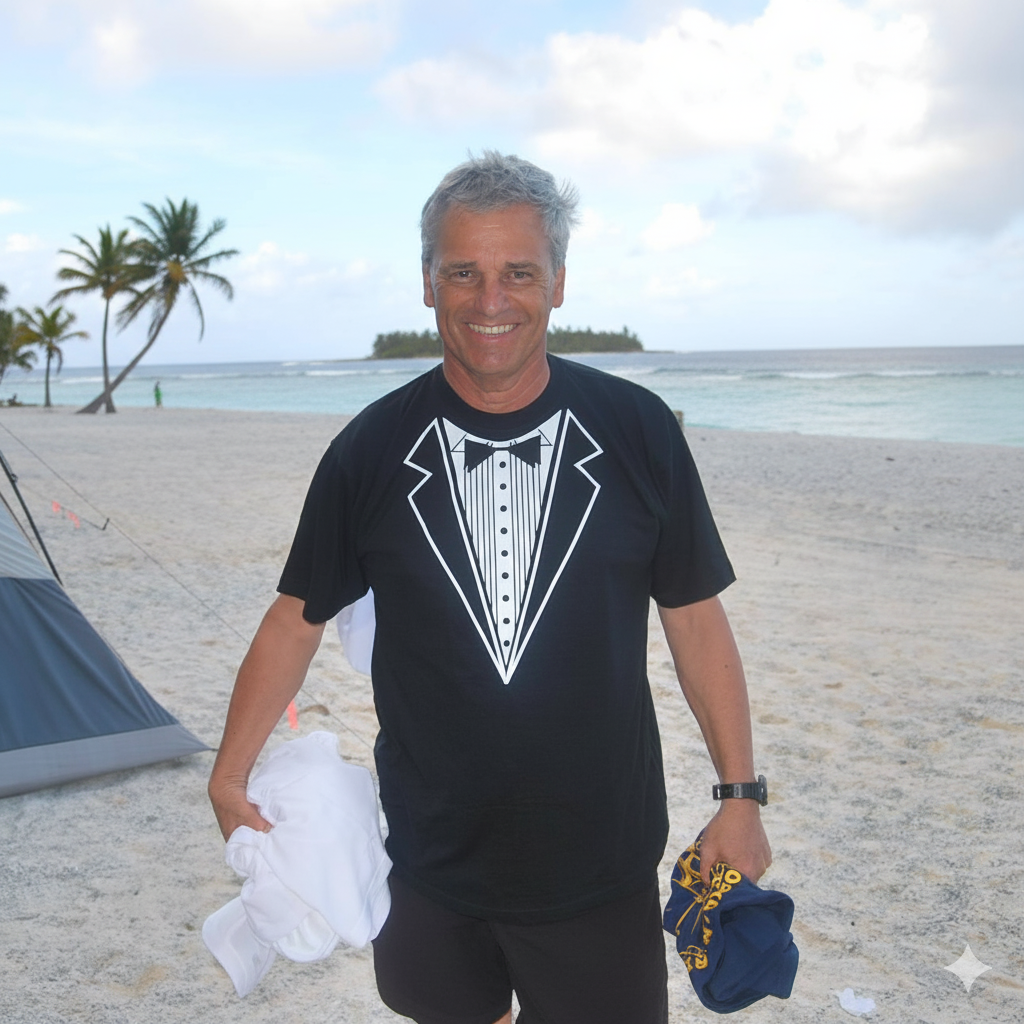
We proudly dedicate this expedition to Lou, N2TU SK, an honorary member of our team. Lou’s guidance, experience, and unwavering dedication were instrumental in securing the necessary permits and helping transform this project from an idea into reality. His counsel and support were invaluable at every stage of the planning process.
This DXpedition honors Lou’s legacy and represents what would have been his final expedition. We carry his spirit with us and are deeply grateful for his lasting contributions to the DX community.
The Plan: A “Long-Term DXpedition”
What if we placed a remote radio on a remote DXCC entity?
That is exactly our plan.
Desecheo Island is uniquely suited for this concept. It remains high on the most-wanted list while being geographically close to mainland Puerto Rico. In fact, it is the only top-15 DXCC entity that allows us to deploy, maintain, and service equipment efficiently—often within a single day, returning home the same evening.
Because Desecheo lies only a few miles offshore, it provides an ideal location for a long-term remote radio installation. This proximity allows for periodic maintenance visits, ensuring continued reliability and extended operational periods without the logistical challenges of distant, hard-to-reach entities.
Our mission is to maintain continuous operation for 30 days, providing as many operators as possible with an ATNO (All-Time New One) while preserving the island’s delicate ecosystem.
QSL Information
QSL via: M0OXO
Collaborations
This DXpedition is a collaborative effort involving:
- Vieques Amateur Radio Club
- Manyana DX Foundation – https://manyanadx.org/
- Remote Ham Radio – https://remotehamradio.com/
Manyana DX Foundation
The Manyana DX Foundation, led by Ezequiel “EZ” Prado HI3R, plays a critical role in enabling sustainable DXpeditions worldwide. The foundation specializes in the design and deployment of Remote Deployable Units (RDUs)—self-contained, field-proven systems engineered specifically for remote and environmentally sensitive locations.
For this expedition, Manyana DX Foundation is providing RDUs powered by solar energy and battery storage, allowing for continuous operation without the use of fossil fuels. This approach significantly minimizes environmental impact while maintaining reliable, high-quality amateur radio operations.
Beyond this activation, the foundation’s mission extends to supporting future DXpeditions by making this equipment available to other teams, lowering barriers to entry and promoting environmentally responsible operating practices across the DX community.
Remote Ham Radio
Remote Ham Radio (RHR) is contributing its extensive technical expertise and proven remote-operation infrastructure. With over a decade of experience in remote radio technologies, RHR will provide the control interface, system monitoring, and operational integrity required for this project.
Their custom-developed Web Console offers a seamless and intuitive user experience, while backend systems ensure accurate logging, monitoring, and compliance—preserving the integrity and “pureness” of the DXpedition operation.